
There is a version of your funnel where a stranger finds a part on a Tuesday, downloads what they need on a Wednesday, and recommends it on a Thursday. No sales call, no nurture sequence, no scoring model.
For half your audience, that is not an aspiration. It is already how they work.
The 2026 Buyer Journey Study asked 750 engineers how long they typically research before recommending a product:
Half the audience gets to a recommendation inside a few days. Under a quarter takes a week or more. And the largest single group after "a few days" isn’t a duration at all — it’s the 27% who are permanently in evaluation mode.
So there are two audiences with opposite relationships to time, and a standard six-week nurture track is calibrated for neither. It is far too slow for the sprinters and far too pushy for the marathoners.
For the 50% working on a few-days timeline, marketing barely matters and infrastructure matters enormously. They need the datasheet, the price, the stock position, the CAD model and the sample — and they need all of it without asking anyone.
The study is emphatic here. Fifty-eight percent rate easy online access to samples or evaluation kits as critical or very important, and for 17.07% it is a hard requirement: no sample access, no recommendation. Written-in answers repeatedly named missing CAD models, SPICE files and PCB footprints as outright deal-breakers.
And the cost of friction is not a lost form fill. It is a lost consideration you never see. Sixty-eight percent of engineers have delayed or reconsidered a vendor because of a poor digital experience. That happens silently, in an afternoon, with no attribution record and no follow-up.
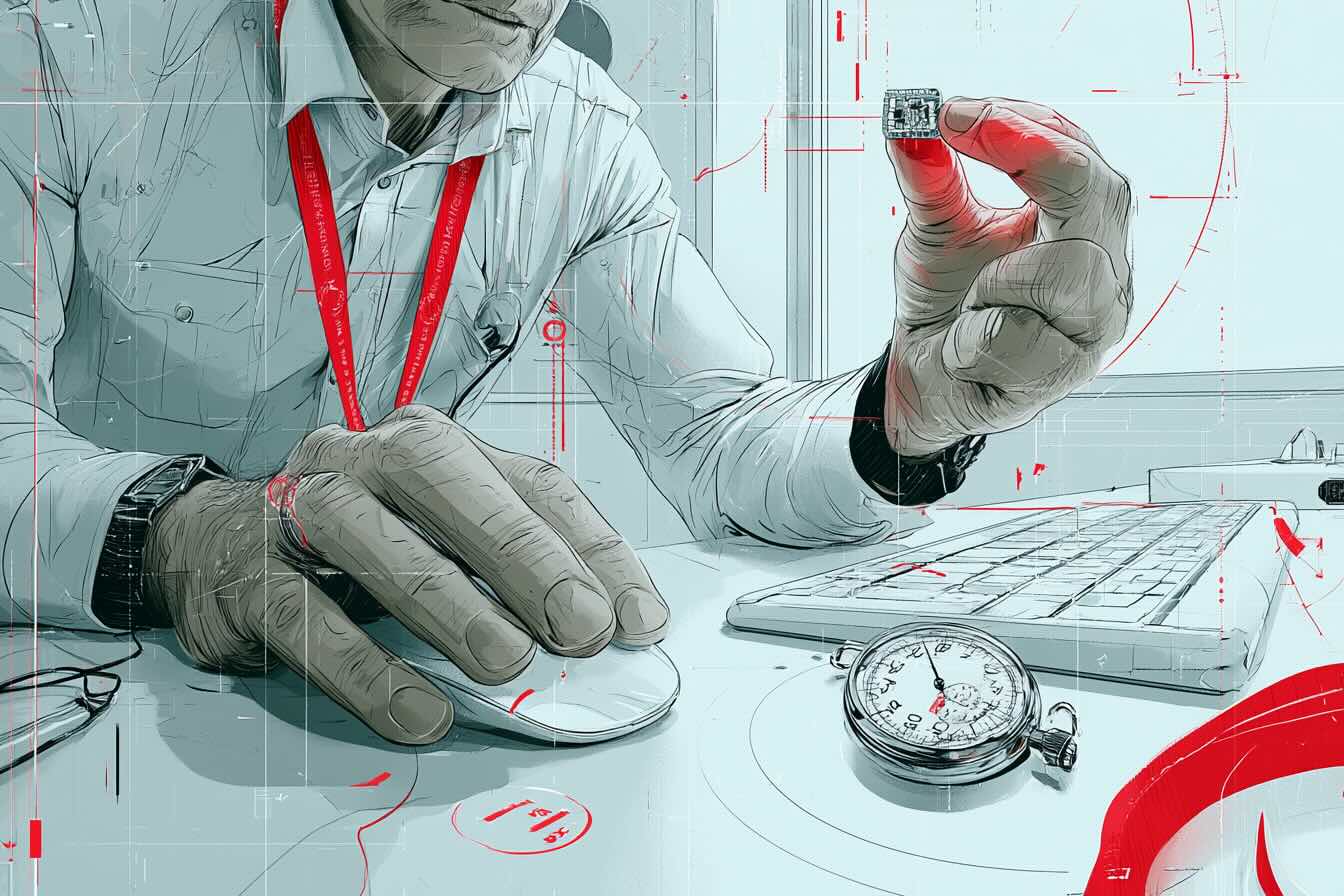
The upside is that this is fixable with a stopwatch rather than a strategy. Start at a search engine as if you knew nothing about your own company. Find the part. Read the specs. Confirm stock. Download the CAD model. Order a sample. If you cannot finish in an afternoon without an internal favor, that is the gap — and closing it is entirely within your control.
The 27% in ongoing mode need the exact opposite treatment. There is no deadline to accelerate and no decision to close. Pressure does nothing. Presence does everything.
These engineers are absorbing content well before any buying trigger, building a mental shortlist for projects that haven’t been scoped. Engineering-specific newsletters, websites and community threads are how they do it, and this is the one audience where patient, technical, non-promotional content has an unambiguous job.
Nurture absolutely works here. It just cannot be a countdown. A five-email sequence that escalates towards a demo request is designed for someone with a deadline. Give this group something worth reading every month instead, and let familiarity compound until the project appears.
One more number reframes the whole calendar. In the study, 83.47% of engineers are involved in researching potential solutions and 71.20% recommend the final choice — but only 30.67% approve the purchase.
The engineer’s decision is effectively made at the recommendation, not the purchase order. Every marketing touch that lands after that point is arriving at a decision that has already been taken. If your program is weighted toward late-stage nurture, it is spending its budget after the game.
Half your audience is ready to choose a supplier this week. That is a gift. It only requires that your website can answer a technical question in an afternoon, and that your content keeps showing up for the quarter of the market who are not in a hurry at all.
Neither of those needs a bigger budget. Both of them need someone to go and look.
The full 2026 Buyer Journey Study is free to download — every research-duration, sample-access and digital-experience figure behind this post. Get the study →
This research was conducted by EETech in partnership with SparkWire. The 2026 Buyer Journey Study surveyed 750 qualified professional engineers worldwide in May 2026. Margin of error ±3.6% at a 95% confidence level.





.svg)